
Why Mortgage Rates Move So Much, and What Buyers Should Actually Watch
- Updated Mar 8, 2026
- Mortgage Rate Guide
- Home Buying Strategy
Why Mortgage Rates Move So Much, and What Buyers Should Actually Watch
Mortgage rates do not move only because of Federal Reserve headlines. This guide explains what actually moves rates, why buyers often feel whiplash, and what matters most when you are deciding whether to make a move.
Quick Answer
Mortgage rates are influenced by much more than Fed meetings. Bond market movement, inflation expectations, investor sentiment, and economic data all play a role. For buyers, the better focus is monthly payment, buying power, and readiness rather than trying to perfectly time the market.
This article is meant to simplify the bigger picture so buyers can make decisions with more confidence and less noise.
On this page
If mortgage rates feel confusing right now, you are not alone.
A lot of buyers assume mortgage rates move only when the Federal Reserve makes a big announcement. That is part of the picture, but it is far from the whole story. In reality, mortgage rates can shift because of inflation fears, investor sentiment, economic data, energy prices, and changes in the bond market, sometimes all at once.
As of March 5, 2026, Freddie Mac’s average 30 year fixed mortgage rate was 6.00%, up slightly from 5.98% the week before. One year earlier, that same average was 6.63%.
So what is really moving mortgage rates?
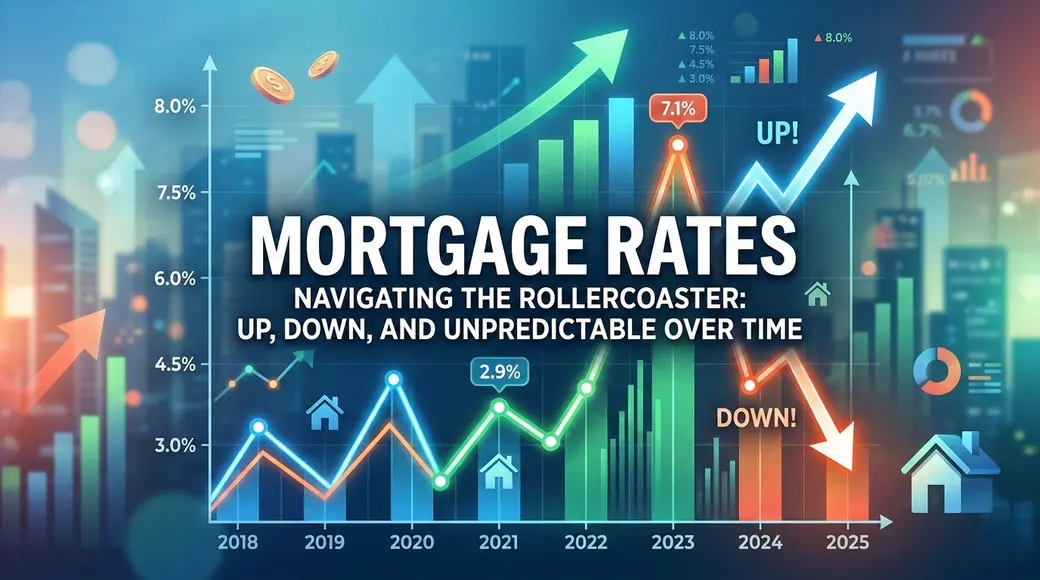
Mortgage rates do not move in a straight line. This chart helps show how much they can shift over time, which is one reason buyers often feel like the market changes from one month to the next.
The bond market matters more than most people realize
Mortgage rates tend to follow long term borrowing costs more closely than short term headlines. One of the biggest benchmarks is the 10 year Treasury yield. Mortgage lenders are competing for capital in the same broader market, so when long term yields rise, mortgage rates often rise too.
That means mortgage pricing is not just about housing. It is also about the economy as a whole.
Inflation expectations can change rates quickly
This is one of the biggest reasons rates can move before the average person sees any major change in the economy.
If markets start expecting inflation to stay hotter for longer, lenders and investors usually demand higher returns. That pushes borrowing costs up, including mortgage rates.
In plain English, even if your personal situation has not changed, the cost of financing a home can change because markets are trying to guess what comes next.
The Fed matters, but not in the way most people think
The Federal Reserve does not directly set 30 year mortgage rates. What it does control is a short term policy rate that influences broader financial conditions.
So when people say, “The Fed cut rates. Why did mortgages not drop?” this is the reason.
Bad economic news does not always mean lower mortgage rates
This is another point that catches buyers off guard.
You might see a weak jobs headline and assume mortgage rates should fall. Sometimes they do. Sometimes they do not.
Why? Because markets do not react to one number in isolation. They react to the full picture. If job growth slows a bit but wages stay strong, spending remains resilient, and inflation risks linger, rates may not drop much at all.
The market is constantly asking a bigger question: Is the economy truly cooling, or just slowing a little?
What buyers should focus on instead of trying to win the rate game
Trying to perfectly time mortgage rates is usually a stressful strategy.
A better question is this: If the right home showed up and the payment worked for your life, would you be ready?
That is where buyers tend to gain confidence.
Here is what I encourage buyers to watch:
1. Monthly payment, not just headline rate
A slightly higher rate on the right house can still make more sense than a lower rate on a home that does not fit your needs.
2. Your own buying power
Income, debt, down payment, reserves, and credit profile all shape what your real options look like.
3. Local competition
In some markets, falling rates bring more buyers back into the game, which can mean more competition and stronger prices.
4. Refinance potential later
The rate you buy with does not have to be the rate you keep forever. The home matters too.
My advice for buyers right now
Mortgage rates are important. They affect affordability, confidence, and decision making in a real way. But they are not the only story.
The buyers who tend to do best are the ones who understand the moving parts without letting every market swing throw them off course.
Right now, rates are still meaningfully lower than they were a year ago, even after moving back up to 6.00% in early March 2026.
That does not guarantee easy conditions ahead. It does mean buyers should stay informed, stay prepared, and make decisions based on their full picture, not just one weekly mortgage headline.
If you are wondering how today’s rate environment affects your buying plan, I can help you think through it in a practical way so you can move with clarity instead of guesswork.
Frequently asked questions
Do mortgage rates move only when the Fed makes an announcement?
Why do mortgage rates sometimes stay high even when the economy looks weaker?
Should buyers wait for a lower rate before purchasing?
What matters more, the rate or the monthly payment?
Can buyers refinance later if rates improve?
Want help understanding what today’s rates mean for your buying power?
If you tell me your budget, target area, and payment comfort zone, I will help you think through the numbers and the next best step in plain English.
Talk through your buying planCalRE 02227615
Categories
Recent Posts







GET MORE INFORMATION